





Author: kroset

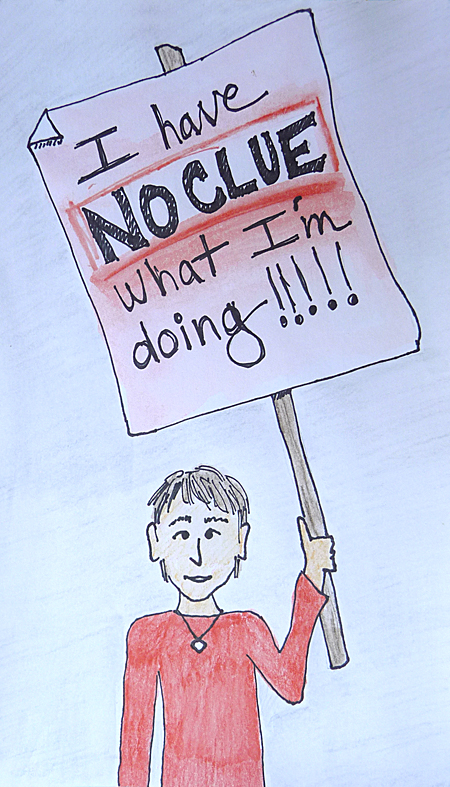
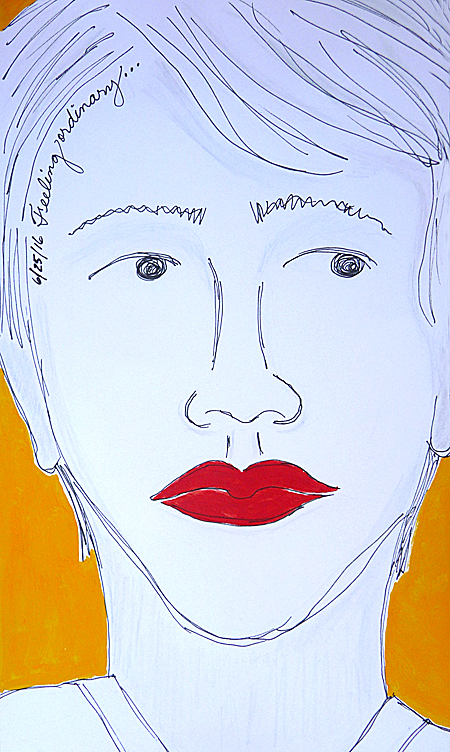
What am I doing?
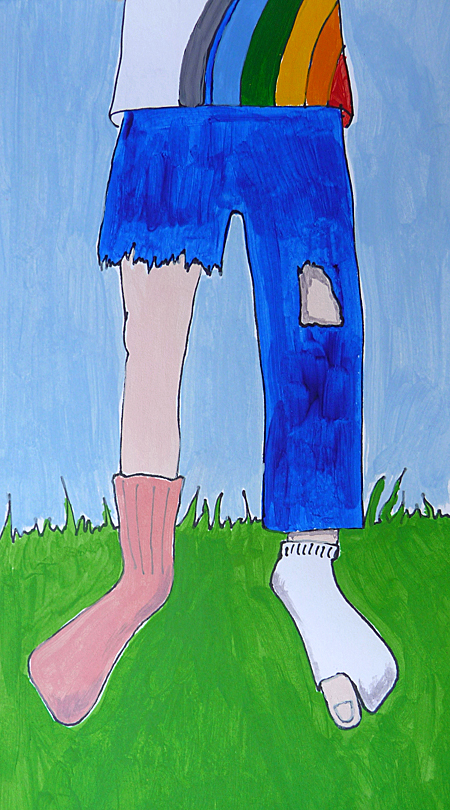
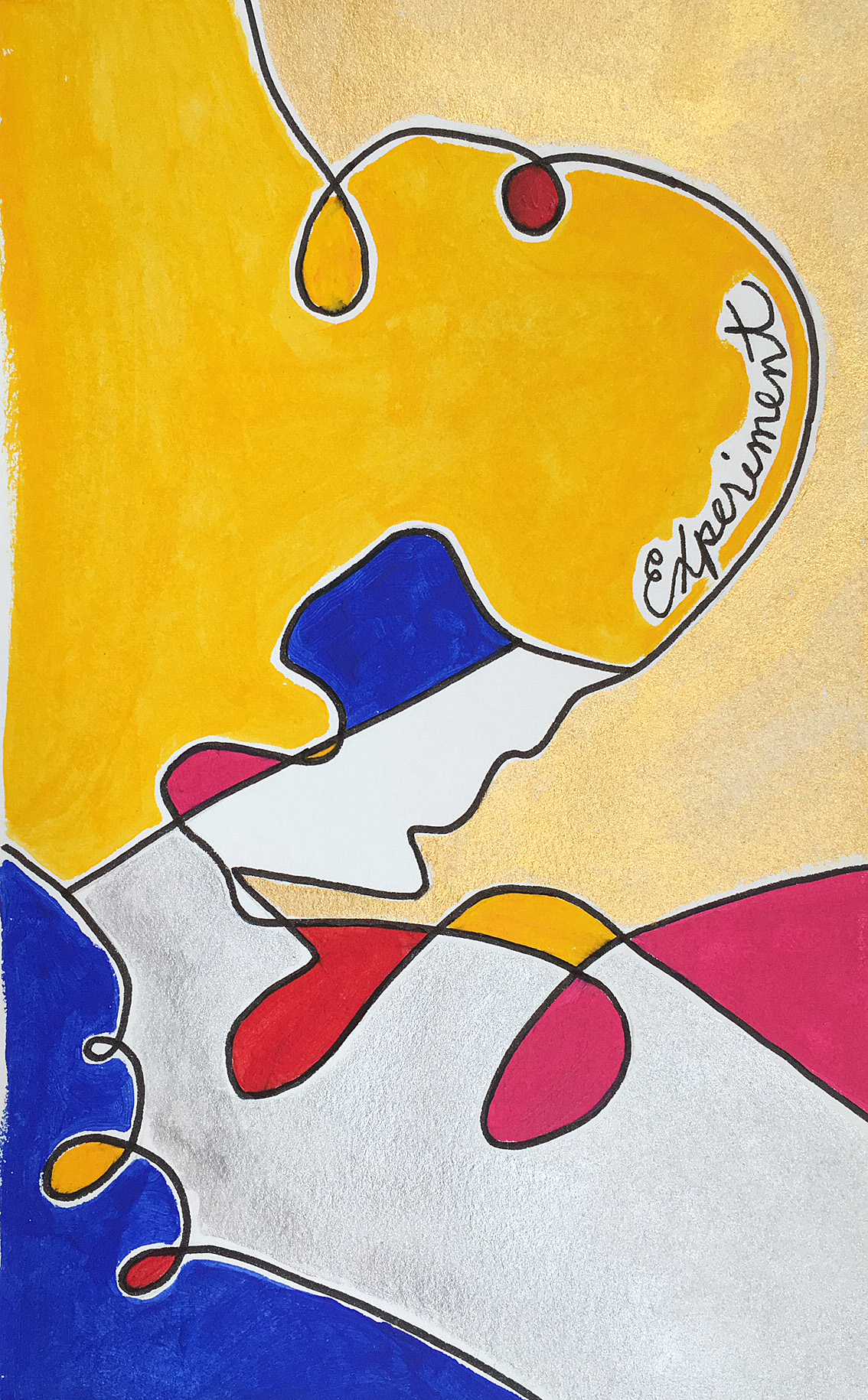
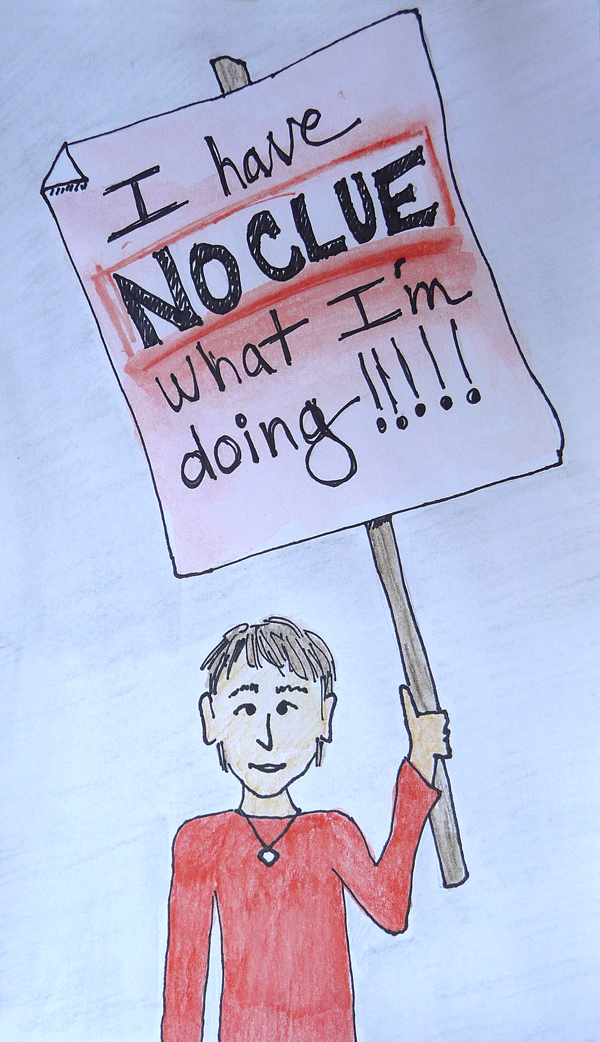
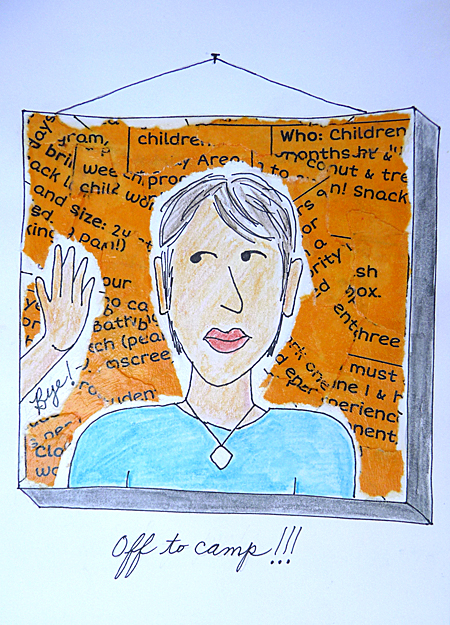
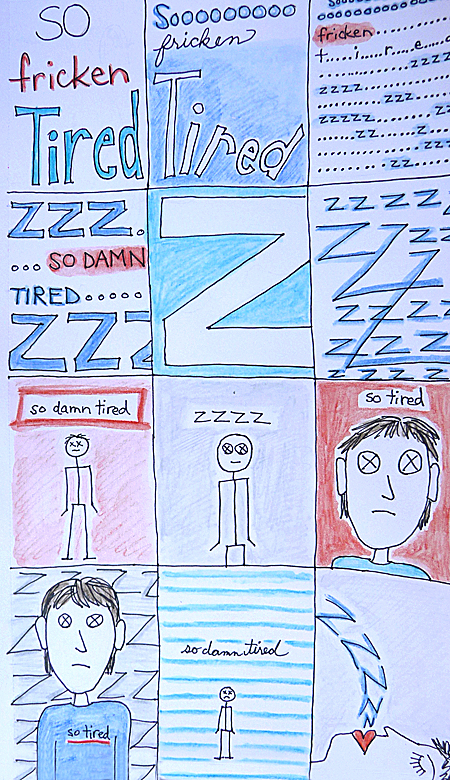
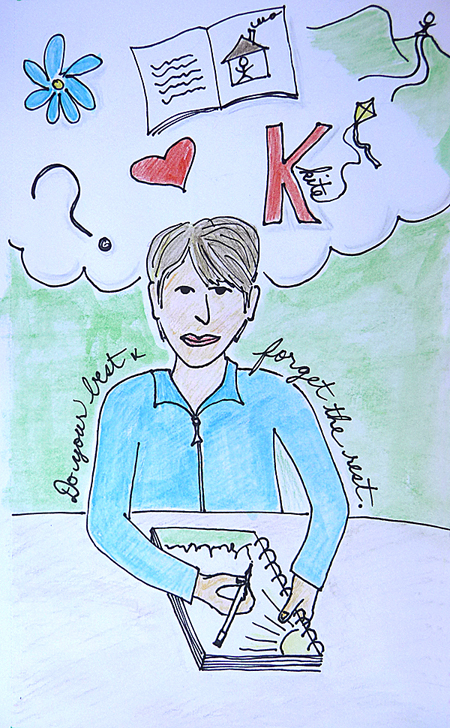
I ran across this self portrait when I was uploading drawing from my Fall 2016 sketchbook. It’s exactly as I feel today and so many times in my life. Since I suspect I’m not alone in my feeling I thought the image was worth sharing.


Adoptive mother: Balancing structure and free play
I’m happy to report that my son has been in kindergarten now for 2 weeks and there have been no reports of behavioral issues from his teacher as of yet. In fact, my son seems to be a model student. (Knock on wood – I don’t want to jinx it!) I’m pleased with how my son has adjusted to school these first few weeks. It’s been a really big adjustment for the little guy going from having a lot of unstructured play time each day to a very structured and regimented day with a strict teacher. As sad as I am that my child’s copious amounts of free time are now gone I’m suspecting that the structure his teacher is providing in the classroom is actually really good for my son. Our son’s therapist hit the nail on the head when she predicted: “the stricter the teacher the better it will be for him.”
Looking back at my son’s preschool years and at this past summer I remember how often I was struggling with my son’s behavioral issues. I’ve recognized a lot of his behavioral problems seem to stem around free play or when he is bored, in contrast, during circle time with teachers and in a more structured camp setting he had little or no behavioral problems at all. To say that these play-based situations are the crux of his behavioral problems would not be a fair statement since there may be underlying issues going on in the sections of my son’s brain which deal with the fight or flight response, however, I will say that in my son’s case I think having the amount of free play he had didn’t help his situation. I am in no way suggesting that play-based environments are bad or that I shouldn’t be giving my son time to choose his own activities – far from it. I just think that for certain kids, like mine, more structure might have been beneficial for him. In hindsight my son appears to actually NEED more structure in his days and for now at least is thriving.
Regardless of whether children thrive more with play or structure (there are compelling arguments all over the internet for both sides) I believe all children need exposure to both of these things. Through free play children learn to work a lot of things out themselves without the help of intervening teachers or adults. On the flip side, structure helps kids learn to follow rules and learn about consequences which is absolutely necessary in life when living in any society. Kids need practice in both areas. My son is so much better on a playground now at 5-years-old than he was at 4-years-old. I credit his improvement for two reasons: 1) because he is developmentally one year older, and 2) because I took him to so many parks and he interacted with so many other children over this last year. He got better playing with other kids through much practice. How can anyone possibly learn to adapt when altercations come up if they don’t have adequate practicing time on a playground? The same can be said when dealing with structure at home or in a classroom. It takes practice and discipline to learn to cope within a strict environment.
A troubling issue that I see at my son’s elementary school is the need for a better balance of free play and structured time. Our son’s school, like many other schools, currently weighs more heavily on structure. I find the lack of recess for kindergarteners at my son’s school disturbing with a total of just 15 minutes daily in a 6 hour period. 15 minutes! Upon discovering our children’s lack of recess time, another Mom and I decided that after school we were going to take our boys to the school park after class so our kids could vent out some energy. After arriving at the playground we looked on at our two active boys playing and were pleased with ourselves…until we saw our kids immediately start with rough play, tackling each other, pulling at each other’s arms, pushing and shoving each other, basically doing what typical boys like to do where they need a lot of intervention from adults before someone gets hurt. The other Mom and I were horrified at their behavior and soon we had a realization: perhaps part of the reason why schools don’t give more recess time besides the push for more academics in schools is the lack of staff to oversee the kids at recess. We both looked at each other laughing as we both said almost simultaneously, “Maybe it’s a good thing that they aren’t getting recess during school!”
Despite our realization of this I think we both know in our hearts that this rough free play is actually really good for them even with their need for structure and we both showed up at the playground again the following day with our boys to watch them play again, thankfully with less altercations this time. I have no plans to eliminate this play time from my child’s schedule anytime soon. He gets his much needed structure time from his teacher at school and I’m most grateful for that, but from me he is going to get the gift of free play. He needs more practice, clearly, and I’m going to make sure he gets it. So play on my sweet boy, play on!
“Make Way for Play” is a good article on the pros of free play.
http://www.scholastic.com/parents/resources/article/creativity-play/make-way-play
Kathy Eugster writes a good article on providing structure for your child
http://www.kathyeugster.com/articles/article005.htm
Comparing the two preschool philosophies: Play-Based vs. Academic
http://www.pbs.org/parents/education/going-to-school/choosing/comparing-preschool-philosophies/





Adoptive mother: Unknown territory
My son will be 5-years-old in 19 days and will be exiting preschool forever by summers end. I am anxious to begin this new phase of our lives with our son which is not a foreign feeling to many other parents getting ready to enter the elementary school phase.
Like other parents, I have a lot of worries going forward with kindergarten. I hope that we’ve picked a good school for our son and that he’ll like it and will do well and that the “damage” my husband and I will inevitably inflict on him throughout my son’s life will be minimally linked to our primary school choice for him. My boy asked me at one point, “Will there be dress up clothes in kindergarten?” and I cringed inside knowing full well that many of the things like dress up that he loves to do in preschool will be substituted for more academic learning. (So terribly sad!) I worry that I will not be able to protect him anymore and that my son’s sweet innocence may be lost or crushed in his first year of school. (He can be so sweet and I love him so much!) I also worry that kids will be mean to him because let’s face it sometimes kids can be really mean! And lastly, and of most concern, I worry that he’ll be mean to others if he can’t get a handle on how to self regulate his own emotions which when out of control can cause him to lash out at others. (Please, please, please don’t get kicked out of kindergarten!)
Most of these fears I have about kindergarten are brought on by our society since it seems to expect so much of our children at such a young age or perhaps we adults are simply too involved. We expect a lot of kids now verses in the generations before us. Not only are kindergarten days longer (there are no half day options around us), the requirements that many schools now expect from kindergarteners is what used to be expected from first graders. Somewhere in the last couple of decades it seems that a whole year of childhood has been lost due to higher expectations being placed on our young children.
There are additional worries I have as well that go beyond school and are more about my son growing up: Will he no longer want to snuggle up with me now that he’ll be influenced by all the BIG kids? (I love my little boy kisses and hugs and how he still comes into our bed every morning!) Will he no longer want to hold my hand? Will he no longer want me around?
I remember feeling fear/anxiety like this in the very uncertain adoption process of waiting to get picked to adopt our child. Nothing at all was certain about that process. Nothing. If there was one lesson I learned from that unsettling time was that nothing in life is ever really certain, for anyone. Why I ever assumed certainty as I get ready to send my kid off into his first days of kindergarten is beyond me.
With that said, I’m now going to take a breath and step back for a moment. B R E A T H E … B R E A T H E … B R E A T H E … B R E A T H E … B R E A T H E …
Everything is going to be alright. Really. Who knows what will work or not work for my son. We can only make our best guess and move on from there. All I really need to do now is to take it one day at a time and tackle whatever problem that comes my way when and if it comes my way.
On the flip side of things there are going to be some real benefits to my son starting kindergarten. I’m really excited to gain some time back for myself. Self time has been pretty nonexistent for many years now and it is time to put the focus more on me again. I’m hoping to have time for pampering myself (like looking in the mirror again at some point during the day, preferably before I leave the house), doing more artwork and writing, and figuring out in which direction to take my work/blog. Instead of putting all of my attention on things to worry about I’ll do my best to place my focus on the exciting journey ahead of us – at least that is what I’m telling myself!
Van Gogh style
My son had some extra paint leftover on his palette and I still needed to do my sketch book art for the day so I decided to try my own replication of Van Gogh’s famous Starry Night painting. I was pretty pleased how it turned out.

It’s amazing what you can create when you are just trying to use up some leftover paint.





Adoptive mother: My defiant child
I’ve been quiet over the last five months because of issues that have come up with our son that I’ve been struggling to share. Most of what I’ve shared on my blog has shown a positive light on our whole adoption experience; it is easy to share things when they are going well. However, the last several months have been challenging for my husband and I as we’ve been dealing with my 4 ½-year-old son’s anger issues which has led to very aggressive and defiant behavior at times causing us to desperately seek help from a counselor. Now that we’ve been getting professional help for a couple of months and we feel our son’s anger/defiant issues are slowly improving I’ve been able to reflect a bit on some things I’ve learned.
Below is a summary:
Behavioral issues are complicated: there are so many factors to one’s behavior (Ex: genetics, environment, individual personality, anxiety, developmental phases, trauma and/or adoption issues, medications, chemical imbalance) that it is difficult to pinpoint what one or more things contribute to any individual’s problem and how to help your child.
It is not unheard of for a 4-year-old to have trouble dealing with anger but my son’s reactions are sometimes much more extreme than other kids his age. He often times acts out defiantly and with aggression when he is angry if I tell him “No” to something. When in one of these tantrums he hits, bites, kicks, yells, says mean things and throws things. Sometimes these violent rages can last up to an hour or longer.
A term called ‘anger overload,’ coined by David Gottieb PhD, “refers to the intense anger response by the child to a perceived insult or rejection. The rejection can seem quite minor to parents or others.”
Anger overload is a term for any person with issues managing anger, not specifically adopted children, however the description of anger overload manifesting as oppositional defiant disorder happens to fit our son perfectly. We have been using the tips and suggestions David gave on how to deal with my son’s anger episodes and they have been helping for us although it’s a painfully slow process. We hope that with consistent guidance my son will continue to learn over time to manage his anger.
There are opposing theories about a term referred to as ‘primal wound’ – that ALL adopted children (even those adopted at birth) have trouble with attachment and/or anxiety due to abandonment issues.
This ‘primal wound’ theory took me by surprise because, naively, I assumed since we had a good birth family situation and a seemingly easy child his first few years of life that we were in the clear for “issues” coming up later so long as we provided a good environment for our child. According to this theory even children coming from a drug free pregnancy who were adopted at birth are affected by a sense of abandonment that never really goes away for them and it manifests in their lives later in life often as anxiety. According to Karl Stenske, adopted children react to the abandonment issues in one of two ways: they either act out and are difficult or are “quiet, adaptable and compliant” although inwardly these people struggle as much as the others. Dawn Davenport counters this primal wound theory in her article saying that, “many adopted person do not carry this ‘primal wound’, or if they are wounded the cut doesn’t go so deep.”
A 2008 study revealed that the odds of having an ADHD or oppositional defiant disorder (ODD) diagnosis were nearly twice as high in adoptees compared with non-adoptees.*
It always made sense to me that older children who were adopted would have more behavioral issues but I was surprised to hear that even those adopted at birth fell into this category. Again, keep in mind that behavioral issues are hard to pinpoint since so many issues affect someone’s behavior. However, in adoptive children if you take the abandonment issues into account that could explain some of this as anxiety often manifests itself as behavioral issues such as ADHD or ODD. I’m still struggling to find more information on specifics of those adopted at birth since most information lumps all adopted children into one category.
Children with anxiety (AKA: many adoptive children) have a higher rate of addiction later in life to addictive substances.
As our therapist explained it, for someone suffering with anxiety any addictive substance they try in life that might alleviate their feelings of anxiety will seem more appealing to them then it would to someone else trying the same addictive substance that does not suffer from anxiety. This is NOT to say that anyone with anxiety trying addictive substances will get hooked on them or that all adoptive children will become addicts; it just simply says their rate of addition will likely be higher than the rest of the population.
There are times when you might not like your child (adopted or biological) and that is OK.
There were a few times over the last 5 months when I found myself not liking my child. Although I never stopped LOVING him, this was devastating to me because before I always really liked him. But how to do you like someone who consistently hits you and is sometimes extremely difficult to manage? Unlike an abusive relationship with a spouse where you can potentially leave the situation, you can not just walk out on your child. As a Mom there were times where I really felt trapped. Luckily those feelings passed after getting help from a therapist. As his behavior improves these feelings of dislike diminish.
Behavioral issues in children are not necessarily a result of bad parenting.
There are times when a child’s behavior is NOT a reflection of the job the parent is doing. Some kids simply do not comply to what their parents say, no matter what the parents say or do. Sometimes a parent needs to step back and remind themselves that what their child is doing is not a direct reflection on them. Before any issues came up with our son I was guilty of judging parents of excessively difficult kids. Now that I’ve had a taste of parenting a child that is challenging I am much more understanding of parents of other defiant children. (My child is usually only difficult when he doesn’t get what he wants. Some children are challenging ALL of the time.) It is heart wrenching as a parent to not be able to control your child but sometimes your child is simply not in your control.
References:
Davenport, Dawn. “Primal Wound.” Creating a Family. October 1, 2012.
Gottlieb, David. “Anger Overload in Children: Diagnostic and Treatment Issues.” GreatKids.
*Park, Madison. “Adopted Children at Greater Risk for Mental Health Disorders.” CNN. April 14, 2010.
Stenske, Karl. “Adoptee View: What Can a Tiny Baby Know?” Adoption Voices Magazine. November 13, 2012.