Adoptive mother: Accepting without blame

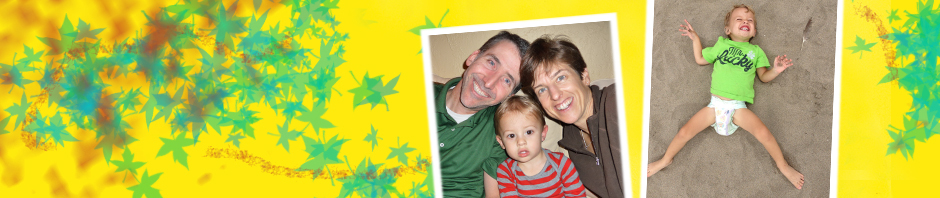
My 3 ½-year-old son is squarely in his toddlerhood. He is at the age where he is super cuddly, sweet and playful; he gives the best hugs and kisses; he’s super fun to play with and chase; and he is also right in the center of one of the hardest tantrum years. Yea – forget the terrible twos, anyone who had a toddler child will tell you the threes are where it’s at. He challenges us daily. He is very demanding now about what he wants, which is great that he is seeking out his independence but not so great when we try to get him to do anything where he has a different agenda than ours.

If he doesn’t get what he wants when he asks for it you can guarantee there will be lots of whining, manipulating, begging and often crying. All of that is annoying as heck but stuff that I can handle. It’s the escalated version of this tantrum which follows, not always, but on occasion, that is concerning to me. If a tantrum goes too far or if our son feels physically threatened in any way he is flat out violent and completely out of control with physical rage. He will try to hurt me (or my husband, or whoever else is ‘threatening’ him or getting in his way) and it is all we can do to hold our son down to keep him from hurting us during these times. It’s a crazy wrestling match between me, a grown adult, and my boy, a 34 pound toddler. When I’m alone with him during these times it takes all of my physical strength to ward off my son’s blows and bites and it terrifies me to know that if he gains just a few more pounds he might actually start winning these matches! Both my husband and I have consulted with our parents about his violent tantrums to ask if either or us had ever given them any trouble is this area in our childhoods and neither us (nor our siblings) had been so violent. We certainly were not angels in our toddlerhood but we were not violent children; this territory is completely unfamiliar to us and our families. Our son’s very demanding and aggressive behavior has led me to utter the phrase more than once to my husband “If this were our biological child we would not be dealing with this!”

This statement causes my husband to roll his eyes at me. I’m aware that it is completely ludicrous and completely unfair to our son’s birth parents. The stone throwing quote from the Bible fully applies here completely even though I’m am not one to normally quote the Bible: Let any one of you who is without sin be the first to throw a stone at her.” John 8:7  This most simply translates to: my genetic history isn’t perfect either so basically shut my pie hole! But I don’t care about any of this rational sometimes. What I want is to scream out at the top of my lungs, “I HATE THIS! I’m not equip to deal with this behavior and I didn’t ask for this! A biological child of mine would NOT be acting like this!” I want to blame someone for my adopted child’s violent and demanding behavior because deep down I think it might somehow make me feel better and less like an inadequate parent who has no idea how to deal with her child.

But my logical rational knows something different. I’m well aware that traits in children can sometimes come out of nowhere. Parents with no family violence in their history can have a violent biological child. Parents who are perfectly healthy have disabled children, kids with autism, kids with ADD, or any number of any undesirable traits that they didn’t expect. One may not ever know where a characteristic of a child comes from. But even if our son’s violent tendencies do come from his birth family, who am I to cast the first stone.

I begrudgingly remind myself that had we had our own biological child we might not be dealing with anger management issues true, but rather a whole slew of other problems and there would be nobody to blame. There would likely be autoimmune issues, skin cancer issues, tendencies toward depression and other mood disorders, horrible acne in the teenage years, infertility issues later in life, just to name a few things on my side alone. And what then? Pointing fingers at myself or my spouse for these things would be completely unproductive.

What I am trying to learn as a parent, not just as an adoptive parent, is that there is no room for blame in parenting. Yes, some traits might be inherited from the birth family, in which case, can an adoptive parent of an open adoption swallow their pride and touch base with the biological family members to work together to come up with possible solutions for their child? If the adoptive parent does not feel comfortable approaching the birth family, or does not have access to the birth family, what can they do in the present to help their child? We must use all resources available to us; and like all families, biological or not, we must learn to accept what is in a person, without blame, and move on from there and try to focus our attention on the bright side: marveling at how amazing it is that each or our children are all their own very unique persons.
Adoptive mother: Clearing up misconceptions

There are two reasons why I am writing columns back and forth with Lizzie, our son’s birthmother. The first is to understand what Lizzie thinks and feels in certain situations because I believe this knowledge will help me be a better adoptive parent to our son later on when he starts asking me questions about his birth parents and adoption. The second reason I want to write columns back and forth with her is to potentially educate other people on open adoptions, clearing up many misconceptions and showing them how dynamic relationships between adoptive parents, birth parents and children can be.

I do sometimes fear that I might write about things or issues that might be painful, disappointing or sensitive to Lizzie. It is a risk writing some columns because I’m being very honest and personal with my feelings and I don’t always know what angst certain topics might cause her or whether or not I’m opening up a wound she is trying to heal. I imagine she must feel the same when writing about topics from her perspective as well, being fearful that I might feel threatened by her or perhaps not like something she has to say. Even though our adoption is an open one there is still much I do not know about my son’s birthmother and how she might feel in regards to situations surrounding our son’s adoption.

Recently, I felt great angst after sharing a column with Lizzie titled ‘Introducing Catherine.’ In the column I revealed telling our son (now 3 ½) for the first time about the existence of his sister, Catherine. Shortly after sharing this column with Lizzie I noticed that she had posted a couple of somewhat gloomy Facebook postings admitting she was going through a difficult time. In addition, unlike Lizzie, I received no email response about the recent column I had shared with her. My monkey mind immediately jumped to the conclusion that I had upset her with my Catherine article – knowing that she hoped someday for her two biological children to know each other, and that my article saying we were just now telling our boy about his sister surely distraught her. That must be the reason for her gloomy, depressed mood so I thought.

Come to find out, her depressed state had nothing at all to do with my article or anything about our or Catherine’s open adoption for that matter. Had I not felt comfortable enough with our relationship and written her to specifically ask if I had upset her with my article I would have kept assuming, incorrectly, that her dismay was all about us. This incident makes me so grateful that Lizzie and I do indeed have a very open running dialogue going via email and these columns. I’m so blessed to have access to this very private part of her life. I wonder how other adoptive parents make sense of miscommunications that sometimes happen through open adoptions? Would they wonder continually like I did that birthmothers spend much of their time pining over their “lost” child? Or fear continually that deep down the birthmother must want their child back?

Despite what we might think, her life is not all about our adoption. She struggles with other things. I’m guessing I’m not the only adoptive parent who is surprised by this, not that I don’t see the logical rational behind it; I see our son every day as a reminder of our adoption where she does not. Other adoptive parents might think similarly to me; perhaps they too always have a feeling that their birthmother must be regretful at times in regards to her child’s adoption which causes her depression in life. I’ve learned to not really question whether or not the regret is there, but rather question how much regret is there.

Through this recent exchange with Lizzie I’ve learned a very valuable lesson. As an adoptive parent it is important to remember that our adoption is not always on center stage in the live’s of our child’s birthmothers despite any regret she might feel over placing her child for an adoption. As much as adoptive parents might think and fear that all the birthmother ever does is long for and pine away for their child(ren) making her depressed, this simply is not the case.

Birthmother: Fork in the road

By Birthmother – “You came to the fork in the road and you took it.”

A wise therapist once used this line on me.  He explained to me that sometimes it doesn’t matter whether I turn left or right.  Either way, I make a decision; I pick a path and I don’t stop travelling.  Experience tells me that without accepting a chosen path there is no chance of moving forward.  How can anyone survive if they stop at the fork indefinitely, or if they travel down one path without turning their gaze from the path they left behind?  Can’t you imagine the calamity as such a doubtful traveler rides head-first into a cliffside?

Occasionally, though, life offers unsolicited visions of what the OTHER path might have been.  As I learn more about the mother, Karen, who adopted my son, I am keenly aware that her path could have been mine.  Karen and I have so much in common.  We are similar in age, and even more similar in our personalities.  Karen is open, honest.  Her emotions are exposed at all times (including her love, which she gives automatically as an extension of who she is).  She enjoys the simple things.  She is open to new experiences and embraces them with enthusiasm.  It comes as no surprise that a person with so much openness and emotion would fall easily into traps of depression.  Again, I can relate.

So as I hear about Karen’s life as a mother I can instantly imagine myself in her shoes.  I cannot help but be aware that her life could have been my life, and vice versa.

Could I be living in a safe and healthy home strewn with a toddler’s toys?  Could I be living in a home where play, learning and make-believe are around every corner?  Could I share the joy of taking a young child on adventures, watching the child’s eyes grow wide with excitement at each new experience?  Could I be the mother trying to soothe the anger of a screaming toddler at the local grocery store?  Could I be the one getting covered in bedtime kisses after reading my child’s favorite story book for the 100th time?

Yes, yes I could have chosen that life, but I did not.  I gave birth, but I am not a mother.  I chose not to be a mother.  The consequences of this choice have only begun for me in that I will spend the rest of my life seeing what I’ve missed.

Moreover, I will spend the rest of my life seeing what my children have missed by not having me.  Did I hurt them by giving them up?  Will they be angry?  Doubtful?  Insecure?  And will I be the one to blame?  The older I get, and the older my children get, the more these questions will keep me up at night…

…unless I find some way to make peace with the choices that brought me to this place in my life and with the consequences of my actions.  ***Does this entry end here?  How DO I make peace?  Is it selfish to enjoy life without my children?  I didn’t give my children up so that I could live a happy, carefree life.  I wasn’t ready to take care of another person.  I was NOT in the secure, healthy place then that I’m in now.  Are my children the ultimate judges of my actions?  Is my peace dependant upon their judgement?  Is it enough to know that my choice, good or bad, gave other people the chance to be parents?  I don’t know.

Adoptive mother: Introducing Catherine

Catherine is our son’s sister. We (myself, my husband, and our son) have never met her and I have no idea if Catherine even knows of our existence.  Yet it is because of her that our son exists at all and that Scott (my husband) and I are parents.

It is strange that such an influential person in our lives might not even know of our being and has been talked about so little in our household. So why have I never mentioned her before?

It’s complicated. Our son’s adoption story is a bit complicated. But whose adoption story isn’t complicated right?

In the shortest explanation possible I’ll tell you this: Our son’s existence on this earth was initiated when Catherine’s adoptive parents asked Lizzie to have another child for them bringing to life a sibling for Catherine. Due to things getting complicated in trying to make that happen and Catherine’s adoptive parents splitting up when Lizzie finally did get pregnant, our son came to us in California instead.

Scott and I both agreed that we would be completely open with our son about his adoption, and we never wanted any part of his adoption story to come as a big surprise to him. We want to tell him his story early enough so it would simply be how it is (no sitting down with us one day and dropping a bomb on him about he being adopted.) We want him to have always known his story. This is not to say that today our boy knows his full adoption story. Far from it. Certain details of his adoption are clearly a bit complicated and should be told at an age appropriate time in order for him to understand what it all means. Our job as his adoptive parents is to sift through his adoption story and introduce facts to him when we think he is ready to digest them or when the right opportunity arises. In the case of telling him about his sister – who we don’t even know and have never had any direct contact with – it seemed like an appropriate time never surfaced itself.

At times early on in our son’s life his sister, Catherine, was mentioned in front of our boy when we would tell our family and friends his adoption story but he was much too young to understand what we were talking about at that time. More recently there have been a couple of times when friends who knew about our son’s adoption story asked us about his sibling within earshot of our son. It really bothered me that we would be talking about her when our boy didn’t even know who she was and could now understand what we were talking about. It was time to tell him about her. So Scott and I made a conscience decision yesterday to go out of our way to introduce our son to Catherine.

I was a little bit nervous and apprehensive about what he might say or think of the whole situation.  Would the news be a big surprise to him? Did we wait too long to tell him? Would he be happy or sad that she lived far away and he couldn’t meet her? Would he ask us questions about her?

I grabbed my laptop in preparation for our discussion and I pulled up a recent picture of Catherine, now seven, sitting on her pink bicycle that Lizzie had shared on her Facebook wall. Before dinner when we were all in the kitchen Scott sat down with our son in front of the computer and we both explained to him matter of factly and in the simplest of terms about his sister. We did not want to make a big deal of the news so we made our discussion short and sweet. It went something like this: “We wanted to tell you that you have a sister who also grew in Lizzie’s belly. Her name is Catherine. She is adopted also. She lives in a city back east. Perhaps someday we will all meet her. Here is her picture.” (Whew, it was finally out!)

Our son’s response to my amazement was nothing at all about Catherine or the picture. He didn’t even comment on her cool pink bicycle which surprised me since I know how much he likes the color pink. All he cared about and wanted to do was watch a video on the computer, his usual response when any electronic device comes in front of his face.

The whole situation was a bit laughable looking back on it especially considering how apprehensive I was about revealing this particular piece of our son’s adoption story to him; yet I was so glad that Catherine’s reality was finally out. Now we’ll be able to talk more freely about her as time goes on. Like telling our son of his adoption, this monumental detail of his story has turned out to be just another non-event in our son’s life – as it should be.

Note: A couple of days later after mentioning Catherine to our son, he confirmed hearing what Scott and I had told him while walking through Target. He was jabbering on to himself as he often does, verbalizing various random thoughts out loud to himself, when out popped, “And I have a sister.” in between something as random as “We are getting diapers,” and “I have purple shoes.”

Adoptive mother: Feeling insecure

It’s been a couple of months now since I’ve written and I have to say I’m feeling a bit insecure these days. Of course this conundrum I have is not anything new for me; just ask my husband who will tell you about this cycle I go through where I question my life’s purpose on regular intervals. But admitting this openly, to the public is hard, especially to the birthmother of my child who I’d like to appear as if I am secure in my situation in life. But I’m an honest and open person, and life is not perfect, and this is how I feel at this given moment in time.

So what’s the problem you might ask? I have a beautiful 3-year-old boy who is healthy and happy and loves me to pieces which is exactly what I wanted when I sought out to adopt a child.

The first problem is time. Or to be more specific…alone time to think or accomplish things without a very demanding three-year-old wanting something of me. I distinctly remember a good friend of my husband, talking to me right before we got our son, saying whatever I did as a mother to be sure I didn’t lose myself in my child. He’d seen that happen to too many mothers who’d submersed themselves in motherhood so much so that they’d forgotten who they were and often put their own interests aside if they hadn’t already forgotten what their interests were altogether. I remember this conversation well because I assured him that it wouldn’t happen to me and that I knew what he meant; I’d seen women do that too and I’d always felt sorry for them. However, now, I fear I’ve succumb to it too. It crept up on me slowly without me even realizing it and the lack of alone time I have to think or accomplish things has taken a toll on me. I just recently have planned my first ever days away from our son at the end of this month and I suspect the 4 day trip I’m taking solo back to Pennsylvania to visit family will do me a world of good.

The second problem goes much deeper and involves my own insecurities as an adoptive mother. After we first adopted our son I remember being so worried about Lizzie, our son’s birthmother, and so wanting her to be happy and succeed in life. I’d rejoice at her successes and silently cheer her on. Today I still do those things but underneath it all I realize that I’m still unclear as to the underlying reason why she decided to give up our son and it haunts me sometimes. For many adoptive mothers the answer as to why the birthmother gave up a child is crystal clear. The birthmother might not have been able to provide adequately for a child, or the birthmother might not have been mentally or physically stable. And for that adoptive mom she can be assured that she is “the better Mom” for that child. But from what I can see, Lizzie is doing very well for herself, in fact, as of recently she is kicking ass in pursuing an acting career for herself while at the same time holding down a respectable day job. And she isn’t losing her head in things. She knows what is important in life.

This leaves me, the adoptive Mom who has no career and little time to think about things, feeling a bit on the insecure side. I wonder if our son will compare his two “Moms” one day and look at my lack of career with distain while marveling at Lizzie’s successes?

Of course it could be easily argued that perhaps the reason Lizzie is doing so well today is because she gave her son up. She was smart enough to realize that pursuing her own interests would be a hard thing to accomplish with a child. If that’s the case, kudos to Lizzie for her foresight and I should be jumping for joy as we have both gotten exactly what we wanted: me a beautiful child and family and her many flourishing opportunities in acting and her other interests in life.

It could very well be that these insecure feelings I have from lack of time and in comparing myself to our son’s birthmother are not so terribly unique to adoptive Moms. In fact, I could just be going through what all Moms go through at one point or another because when I really dig deep to see where the crux of my insecurities lie I notice that it really boils down to two very simple questions: “Am I a good mother to my child?” and “How can I do better?”

Adoptive mother: Meeting “Uncle David”

Recently we had the opportunity to meet up with one of our son’s biological relatives other than his birth parents while they were vacationing in California. It was an interesting experience road tripping to meet the maternal birth family and being a part of their family for the day. I noticed some family dynamics at play as our son’s birthmother, Lizzie, her brother, David, their significant others and her step-mother interacted with each other throughout the afternoon – as I would watching any family. It was interesting for me to see how different siblings and family members can be from each other, yet so similar at the same time. I am reminded of me and my own siblings where each of us, even though related, are very much our own persons.

I got to see little bits of our son in Lizzie’s brother, David – particularly his mellow attitude and seemingly good sense of humor. Although it’s impossible to know who he gets that from (Lizzie, John – the birthfather, or elsewhere). Mostly, it was just nice to meet another blood relative of our son and nice to see that he was so good natured.

I’m guessing we might have taken Lizzie’s brother by surprise with how we chose to address him, which was “Uncle David.” We had never really asked what he wanted to be called. It just sort of seemed to be the appropriate way to address him and introduce him to our son. We wanted our 3-year-old to know that David wasn’t just anybody, he was his Uncle. Before we even left on the trip (we took a 5 hour road trip to Southern California to see them) we starting prepping our son for who we were going to see. So Uncle David it was from the get go. And his long standing girlfriend quickly became “Almost Aunt Annie.”

Overall, I’d say our four hours together in California was a fabulous time, short and sweet and a wonderful opportunity. Anytime we get to meet up with his biological family is an occasion for us all – plus we got to explore a city where we had never been before.

Our friends and our families were curious to know how our meeting went as it isn’t everyday that you hear of adoptive parents driving four hours to meet up with the biological parents. I’m certain they wondered if there was any unease at the situation. I can honestly say I haven’t yet felt any unease with meeting up with our son’s birth parents. In the end I think everyone is happy to see our boy happy. Roles that we all play seem very clear. No bounds have been overstepped. Perhaps we are very lucky with our relationship with our birth parents, or, it could be the result of being open and honest about our feelings along the way so there haven’t been any big surprises.  I realize that each adoption is different and I can speak only from my own adoption experience; however, I don’t believe that having a relationship like ours has to be so unique so long as both parties continue to engage with each other and are honest with their wants and needs along the way.

Another one of my adoptive parent friends said, after hearing how our meeting went, that having loving and caring birth parents and biological family in the picture is really awesome since it simply means more people to love your child. I am reminded of the African proverb made so popular by Hillary Clinton, “It takes a village to raise a child.” How very true with a child of an open adoption but it absolutely rings true for any child. The more people to love a child and watch out for them the better that child will be in the long run. Perhaps taking this proverb to heart is the key to a successful open adoption and a successful raising of any child.  I know that we are blessed to have the birth family that we do and I am not afraid to let his biological family members get to know him and love him.

Adoptive mother: Dropping the titles

Our son’s birth parents, Lizzie and John, will be visiting California in a couple of months and we are talking about the possibility of meeting up with them briefly on a mini road trip down to southern California. This could be a new experience for us meeting up with them on the left coast since in the past we’ve always traveled back to the east coast where they live. This particular meeting would also be unique because Lizzie will be traveling with her brother so we might have the opportunity to meet a first of our son’s extended family members – an opportunity that is a rarity for us living so far from them.  These extended family members are very much a part of our adoptive family since they are part of our son’s story. I would be very curious to see what traits in her brother that I see in our son – if any. I have seen some of myself in my brother’s daughter so I know that the likelihood of our son carrying some of Lizzie’s brother’s traits is a real possibility.

This possible meeting with Lizzie’s brother has brought to the surface an issue I haven’t put much thought into before: how would we address him to our son? He is his biological uncle, yet, would HE feel weird with us calling him ‘Uncle?’ It seems weird to say ‘birth Uncle’ or ‘biological Uncle’ and even weirder not giving him any distinction at all. He is an uncle as much as my brother and my brother-in-law are plus it is important for our son to realize that he is part of his biological family. We use the terms ‘aunt’ and ‘uncle’ loosely at times with some of our closer friends when there is no relation to them so it seems a bit insulting not to use uncle with Lizzie’s brother who more than anyone deserves the use of the word.

The whole dilemma on what to call Lizzie’s brother brings to mind an article I read just recently about a Russian adoptee Olympian meeting her birth family for the first time when she traveled to Russia to compete in the Olympics this past winter. The article talked about how the adoptive parents and the adopted child dropped the ‘birth’ title completely when talking about the young woman’s biological family. They simply referred to her biological roots as her family and specifically her biological parents as her ‘parents.’ According to the article there was no threat to the adoptive parents or guilt from the adoptee of potentially insulting her adoptive family. The Russian girl was simply connecting with her family in which she shared genes. Why is this news at all I wondered when thinking more about the article? Why more people don’t take this approach when talking about an adoptees biological family was beyond me since it seemed so logical. Then I decided to ask myself some questions.

“Would I have a problem referring to any of our son’s biological extended family members as ‘uncle,’ ‘aunt,’ ‘grandparent’ or other?” Absolutely not. I feel his biological family members are as much family to our son as his adoptive family. But when I asked myself the question, “Would I feel comfortable at this point referring to Lizzie and John as our son’s ‘parents’ without ‘birth’ in front of it?” And my answer is decidedly no, but when he is older, perhaps yes. “Why? Aren’t Lizzie and John equally his parents biologically as Scott and I are through adoption?” When it comes to the two sets of parents (biological and adoptive) I feel it is best to give the term ‘parent’ to those who are actually currently parenting the child. It is important to differentiate the two, especially when our a child is still so young and he is learning the language. Helping our son clarify what birth vs. adoptive means is important and I think Lizzie and John might agree here.

At this current moment, Scott and my role as adoptive parents is weighing more heavily than Lizzie and John’s biological side as it takes a great amount of effort and energy to raise a child. When Lizzie was pregnant with our son and we were waiting for him to be born I felt that they were far more the ‘parents’ at that moment while we were clearly the ‘adoptive’ parents. I suspect that when our son is older and is no longer living with us, again the tides will shift and we will be at that point where we’re truly equals: adoptive parents and birth parents – or simply all just ‘parents.’

Perhaps the main reason why the Russian adoptee and her family not using ‘birth’ in front of parents is newsworthy is because of an unspoken, larger meaning in doing so: it quietly equalizes the roles of the adoptive family and the biological family implying that one side is no more important or valuable than the other in the long run. Dropping titles of ‘birth’ and ‘adoptive’ before the words ‘mother,’ ‘father,’ or ‘family’ could be a very interesting and powerful concept to explore in the adoption world going forth, if and when individual adoption situations warrant it.

Birthmother: Myth of the mind changing mother

By Birthmother – The Family Court judge who presides over adoption proceedings in the city in New York in which I live is a wise, wise woman.  She has concocted a speech, a speech which I strongly suspect she gives to EVERY biological parent who enters her courtroom to relinquish their parental rights.  I suspect this because I’ve given two children up for adoption in her courtroom and I got the exact same speech both times.  Both times, the speech was important.

The Judge asked me, “Have you seen those shows on TV, where a mom is reunited with a child she gave up for adoption, and she takes the child back and they live happily ever after?”

Most people would have to answer, “Yes,” and I was in the same boat.  I’m sure we’ve all seen episodes of Oprah or Montel with endings like that.  I recently started watching the show, “Once Upon a Time.”  There are a lot of plot lines criss-crossing through that show, but the whole story starts when a young boy goes in search of his biomom.  He finds her.  She steps into his life.  She saves him from his evil adoptive mother.  He forgives her for abandoning him and, of course, they reunite to become a happy family.  I think of this judge’s speech every time I watch the show.

The judge knew I would relate to the story she described, so she continued making her speech without delay.  She got to the point: In real life, a biomom cannot swoop in and “rescue” her child from the adoptive parents.  In real life a biomom cannot change her mind years later and expect everything to change.

I don’t know that adoption law is the same worldwide, but here’s what I learned from my adoption experiences in the State of New York. As soon as a biological parent signs away their parental rights they have no more legal right to their child than a stranger off the street.  If they DID want to fight for custody later, after relinquishing their rights, they would have to go through the same court battle as any other person trying to adopt a child.

So the State of New York does everything possible to make sure that a biological parent is of sound mind and body when it comes time to face this moment in court.  For one thing, a biomom cannot relinquish her parental rights immediately after having the baby.  There’s a waiting period, and several steps in the process before the final paperwork is signed.  Why?  Because every biomom must be given time to consider her options.  True, she may have had 8 or 9 months to consider these options BEFORE the baby was born, but it is a well-known fact that a mother’s thoughts and feelings can change dramatically once she’s held her baby in her arms for the first time.  In every way a biomom is to be respected and protected during the adoption process.  The courts and the adoption agencies make sure that she knows her rights.  They offer her everything she needs, whether she decides to raise the child herself or go forward with the adoption as planned.  In New York they make especially sure that the biomom is not being bullied, bribed or coerced into giving her child up.  It was truly a beautiful thing, the way I was looked after during my pregnancy, and it often occurs to me that the world would be a better place if ALL mothers were shown that kind of support.  In any case, the idea is that an adoption will be safer and healthier for everyone involved if the biomom can give her child up in the safest, sanest, most consensual possible scenario.

Because once the biological parents have made their final decision the attention of the courts shifts to an equally important part of the process: protecting the adoptive parents and the newborn child.  How could a family be expected to thrive if they were living in fear that some unknown blood relative would sweep in out of nowhere and tear their lives apart?  How would any adoptive parents be willing to take on the responsibility and burden of raising a child if those were the conditions?  I am so thankful, SO THANKFUL, that the system protects these families.  I like knowing that even if I lost my mind tomorrow and, in some fit of hormones, tried to reclaim my children, that I would NOT be permitted to disturb their lives.  I like knowing that I would NOT be permitted to take my children away from their REAL family, from the parents who have REALLY taken care of my children for all these years.

Adoptive mother: Feelings for the birthmother

I feel weird saying this but I believe I have very strong feelings for our son’s birthmother, Lizzie. Perhaps this feeling of love (if that’s what it is) isn’t so weird as I’ve heard other adoptive parents express their feelings of love toward their child’s birthmothers that only a shared child can bring to adoptive relationships. But what I feel is slightly different than that, it is rather a strong sense of connection with her that I don’t believe all adoptive mothers share with their child’s birthmothers.

This connection with Lizzie could be from many number of shared interests/ideals that I see we have like: wanting to be good, upbeat people; wanting to help others and make a positive impact in the world some how; valuing people and relationships and experiences more than things; and even the shared desire of expressing our feelings of adoption in these shared articles. Or it could of course be from the most obvious link, our son. It could be any or all of these things yes. But I suspect that our biggest link outside of our son stems from our tendencies to having occasional bouts of depression in our lives. This is something I learned about Lizzie through reading her medical profile before we even talked to her on the phone for the first time. I remember thinking as we were soaking up all the information about our potential birthparents to be, “Wow, she struggles with depression too. Now that’s something I understand and can relate to.” And I immediately felt a bond there.

Whether or not Lizzie senses this same shared bond is beyond me. After all, we are not sharing day to day moods or deep dark secrets in our lives, nor have we ever really talked for any significant length about depression as it isn’t something that is a constant in our lives, just something that rears its ugly head on occasion. I only hear/see what she chooses to share with me through conversation or through postings on Facebook. (I might very well have manifested this whole connection in my head.) Regardless to whether or not this is a shared experience is real to both of us or simply on my end, it doesn’t minimize the feelings I have about it. When I hear that Lizzie is struggling with depression my heart literally aches.

Other people in my life I would feel that way about would be my mother and sister – both of which I have a very deep connection to and both also who struggle with depression on occasion. Of course I’d feel terrible knowing that anyone of my other family member or friends were struggling with depression but the intensity of my feelings would likely be a bit different, I wouldn’t feel it so deeply in my chest. I’ve realized that I need Lizzie as much as I need my mother and my sister in my life. Me. Not just for our son but I need her present in my life and I can not imagine a life without her in it.

I remember early on in the adoption process, before we were matched with our birth parents, thinking how much I hoped the birth parents of our child would not be involved in our life in any way and how I hoped that after we adopted their child that they would quietly disappear. Today when I think of this it is laughable because I know not having Lizzie and John (the birthfather) in our lives to some capacity is as painful as not having my own parents in my life.

Does this terrify me. Yes! How did I become so incredibly needy? How did this happen? I let myself be vulnerable again – I let love in my life again.